
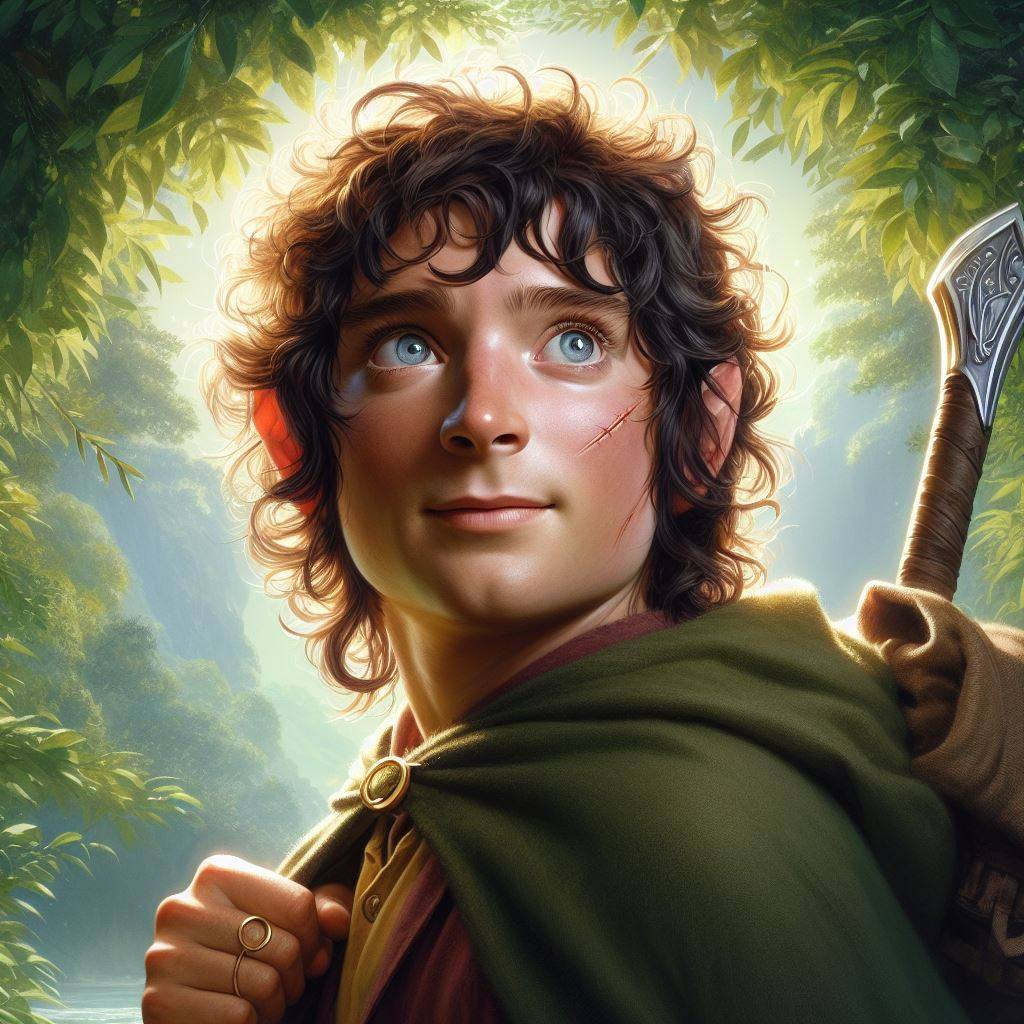
I am in a contemplative mood this week. While meandering along the path of self-reflection, I feel a mysterious force draw me into the journey of Frodo Baggins from the Lord Of the Rings. I am most interested in the motivations that drive him to complete his quest and what personal victory, if any, that he gains from it.
As a hero, Frodo is weak and indecisive. He doesn’t possess great stamina like Boromir, who is fearless in his aspirations to lead his people. He isn’t a powerful wizard like Gandalf, who has extensive knowledge and commanding influence on the Kingdoms. He isn’t of noble blood like Galadriel who rules the great realm of the Elves. Frodo is an unambitious hobbit who only longs for the comforts of his home in the Shire, who doesn’t care about commanding any army or ruling any kingdom. Frodo is, in fact, a hero who seems to lack any particular desire to be a hero at all.
Even more devastating for his case, when Frodo reaches the end of his journey at the Cracks of Doom, his willpower fails him in his goal of destroying the One Ring. Instead of conquering the evil corruptions of the Ring, he succumbs to its powers and selfishly claims the malevolent object as his own. In the eyes of many, Frodo fails in achieving the ultimate goal of the quest when it matters most.
More bleak is the fact that Frodo emerges from the entire ordeal wounded and riddled with guilt about his failure. Though the One Ring is nevertheless destroyed in the fire of Mount Doom and the objectives of the quest are accomplished in the end, upon returning home, Frodo finds that he is unable to return to a normal life in the Shire. His failure to voluntarily destroy the Ring has created doubts about his self-worth and he now struggles to find peace within himself. It seems that even the humblest of hobbits can fall victim to pride and disappointment when they feel that their efforts have been in vain.
In The Letters of J.R.R. Tolkien, the author compares Frodo’s physical and emotional wounds to those of soldiers fighting in wars. Drawing on his own experiences as a WWI soldier, Tolkien reflects that Frodo’s trauma is comparable to young soldiers who are given tasks beyond any individual’s capability to accomplish, yet they have a duty to do all they can to further the collective goal of victory. Just like Frodo, these young men return home broken. Due to the insurmountable nature of their challenge, they’ve technically failed their objectives even when they must’ve given all they could on the battlefield to get as far as they did.
Tolkien makes clear on multiple occasions that it is impossible for Frodo to surrender the Ring at the end of his journey. As Frodo journeys on towards the volcano of Mount Doom where the Ring was forged, the One Ring only gets stronger the closer it gets to the place of its creation. At the Cracks of Doom where the Ring is at its maximum power, it is essentially impossible for anyone to destroy it. Such is the design of the ring that no one can willingly destroy it when the time comes.
Frodo’s purpose in the Fellowship of the Ring then has never been to physically destroy the Ring, but to bring it to the fiery magma of Mount Doom where it can be vanquished by a force far greater than he or anyone from the Fellowship can imagine. Frodo’s accomplishment then is not in having to destroy the Ring, but in accepting to bear its evil burden on the quest so that others do not have to do it.
Amidst heated arguments at the Council of Elrond, it becomes clear that no one can take the Ring, so Frodo volunteers for the mission out of a sense of duty to protect the Kingdoms and humbly says, “I will take the Ring, though I do not know the way.” Frodo’s heroism is in his willingness to take on the dangerous journey with the Ring despite knowing that he isn’t a match for its powers, and despite a deep sense of dread for the mission. Frodo’s heroism is in his courage to attempt to do more than he thinks he can, because it is necessary. He is courageous because he accepts the burden of the Ring voluntarily, even when his fate is a likely death.
Ultimately, Frodo is honorable because he does all that is within his utmost physical and mental strength to complete his quest. He is motivated by the honor in seeing things through even in the face of defeat, even when he has to endure the constant internal struggle against the corruption of the Ring, he still perseveres until the Ring reaches its destination. Thus Frodo’s greatness lies not in glory of destroying the Ring, but in his perseverance and self-sacrifice until the end.
Honoring Frodo doesn’t mean that we’re lowering the bar for how heroic a person can be, but it is in accepting the realistic flaws of men – and hobbits. Frodo is pure enough of heart to actually handle the ring when no one else in the Kingdoms can. Frodo is special precisely because he isn’t special like Gandalf, or Galadriel or Boromir. He had no greater abilities than anyone else and still persevered, and the story of Frodo shows that perhaps moral victory is more meaningful than any kind of physical victory for mankind.